When to drink an Alsace?
Alsace · indicative values: the producer, the vintage and storage conditions come first.
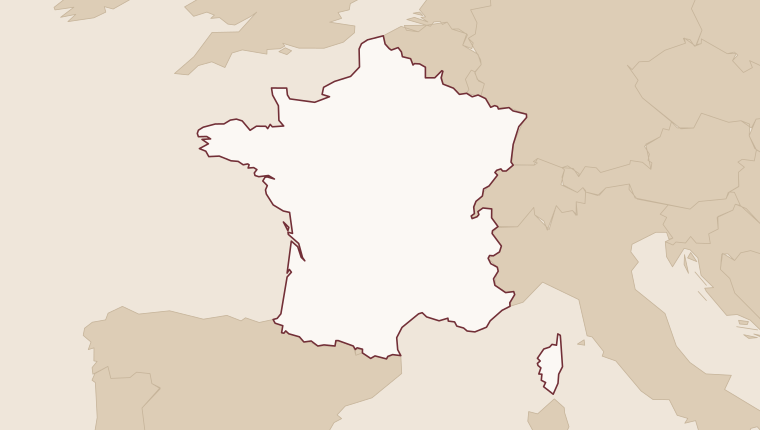 Alsace
Red
Recommended ageing: 2 to 12 years after the vintage.
For example, a 2020 red Alsace drinks best between 2022 and 2033, with a peak plateau around 2026-2031.
White
Recommended ageing: 2 to 15 years after the vintage.
For example, a 2020 white Alsace drinks best between 2022 and 2037, with a peak plateau around 2027-2034.
Rosé
Recommended ageing: 0 to 2 years after the vintage.
For example, a 2024 rosé Alsace drinks best between 2024 and 2026, with a peak plateau around 2025-2026.
Vintage by vintage
A great year outlives an average one: the window moves with the vintage. The most recent rated vintages (Alsace), applied to the ageing for red Alsace given above.
| Vintage | Rating | Drink |
|---|---|---|
| 2025 | Good | 2027–2037 |
| 2024 | Good | 2026–2036 |
| 2023 | Great | 2025–2036 |
| 2022 | Great | 2024–2035 |
| 2021 | Good | 2023–2033 |
| 2020 | Great | 2022–2033 |
| 2019 | Great | 2021–2032 |
| 2018 | Great | 2020–2031 |
| 2017 | Great | 2019–2030 |
| 2016 | Great | 2018–2029 |
| 2015 | Outstanding | 2017–2029 |
| 2013 | Good | 2015–2025 |


The full history, back to the older vintages: Alsace.
How to read this window
Before the window opens, the wine is in its youth: fruit dominates, tannins or acidity can feel stern. During the peak plateau, everything falls into balance: this is the moment ageing prepares. Beyond it, the wine slowly declines: nothing unsafe, but the emotion fades. These are general benchmarks for the appellation, not a verdict on your bottle.
Curious where these numbers come from? The method is published in full: from the estate down to the grape, then adjusted for the vintage and the bottle format.
From the same region
Other appellations in Alsace, each with its own window:
- Alsace Riesling
- Alsace Gewurztraminer
- Alsace Pinot Gris
- Alsace Pinot Blanc
- Alsace Grand Cru
- Crémant d'Alsace
- Alsace Muscat
- Alsace Sylvaner
What about your bottles?
Caviste computes this window for every bottle in your cellar: photograph the label, the sheet fills itself in (estate, vintage, appellation) and the app tells you when a bottle reaches its peak. Discover Caviste.