What temperature to serve each wine at
By Alexandre Rabottin, founder of Caviste. Published November 18, 2026.
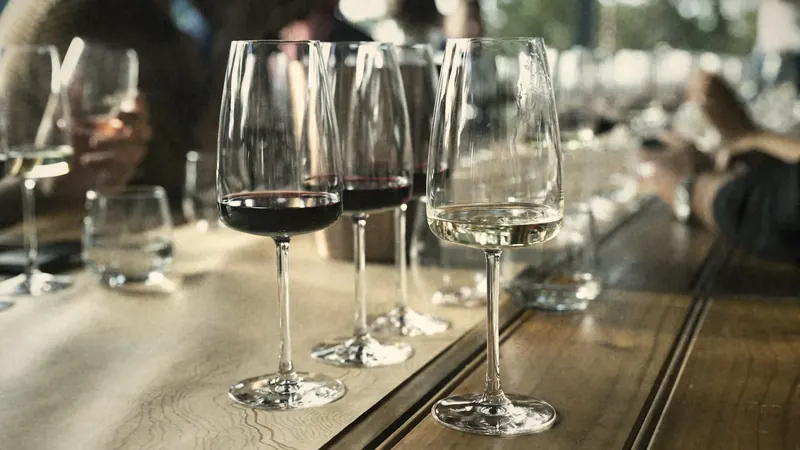
The ranges by style of wine, what cold and warmth do to the taste, and how long it takes to chill a bottle, based on published measurements.
A white served too cold smells of nothing, and a red served too warm smells mostly of alcohol. Sommeliers' guidelines fit in one table, and a handful of studies explain why they work.
Aim for 6 to 12 °C (43 to 54 °F) for sparkling wines, 7 to 10 °C (45 to 50 °F) for crisp whites and rosés, 10 to 13 °C (50 to 55 °F) for rich whites and light reds, 15 to 18 °C (59 to 64 °F) for full-bodied reds, and 6 to 8 °C (43 to 46 °F) for sweet wines. Pour a little cooler than the target, because wine warms up in the glass.
Your cellar tells you when to open each bottle
Scan the label: Caviste files the bottle, works out its drinking window and tells you when it reaches its peak. Free up to 30 wines.


Ranges by style of wine
There is no official standard. The most structured guideline comes from the Court of Master Sommeliers (2024), and other sources differ from it by a degree or two.
| Style | Temperature | Examples |
|---|---|---|
| Sparkling | 6 to 12 °C (43 to 54 °F) | crémant, Champagne, prosecco |
| Crisp whites and rosés | 7 to 10 °C (45 to 50 °F) | Muscadet, Sancerre, Provence rosé |
| Rich whites | 10 to 13 °C (50 to 55 °F) | Meursault, Condrieu, top Chablis |
| Light reds | 10 to 13 °C (50 to 55 °F) | Beaujolais, Loire Gamay |
| Medium-bodied reds | 15 to 18 °C (59 to 64 °F) | red Burgundy, Chinon |
| Full-bodied and older reds | 15 to 18 °C (59 to 64 °F) | Pauillac, Hermitage, Barolo |
| Sweet wines | 6 to 8 °C (43 to 46 °F) | Sauternes, Coteaux du Layon |
| Dry fortified | 6 to 9 °C (43 to 48 °F) | fino sherry, Sercial Madeira |
| Sweet fortified | 12 to 16 °C (54 to 61 °F) | port, Banyuls, Maury |
These are the temperatures of the wine as you pour it, not of the room.
With port, it depends on the style, according to the IVDP, the Douro and Port wine institute: about 4 °C (39 °F) for a pink port, 6 to 10 °C (43 to 50 °F) for a white, 10 to 14 °C (50 to 57 °F) for a tawny and 12 to 16 °C (54 to 61 °F) for a ruby. For sweet wines, The Wine Society suggests a light moscato d'Asti at around 5 °C (41 °F), and a great Sauternes between 8 and 10 °C (46 and 50 °F), so you can still taste it.
What cold and heat do to the taste
Aromas are volatile molecules. The colder the wine, the fewer of them escape from the glass, an effect Ross and Weller measured in 2008, stronger on whites than on reds.
The best documented effect concerns tannin and acidity. Tasted at 10 and 16 °C (50 and 61 °F), red wines came across as more astringent, more acidic and more bitter than at 22 °C (72 °F), in a 2012 study by Ross, Weller and Alldredge. That is why a tannic red is served warmer than a light one.
Then there is alcohol. Ethanol lowers the threshold of the receptor that detects painful heat from about 42 to 34 °C (108 to 93 °F), below the temperature of the mouth (Trevisani and colleagues, 2002). Wine Folly draws a practical rule from this: if the smell of alcohol stings, the wine is too warm.
Room temperature does not mean 20 °C
According to The Wine Society, the advice to serve reds at room temperature dates from a time when houses had no central heating. In France, energy law now caps home heating at 19 °C (66 °F) on average, and Ronan Sayburn, Master Sommelier, notes in Decanter that heated rooms often run above 20 °C (68 °F). A red served at 22 or 23 °C (72 or 73 °F) falls outside every recommended range.
Serve a little cooler than the target
In a small volume, exposed to air and to your hand, wine warms up quickly. iDealwine gives an order of magnitude: a tannic red served at 17 °C (63 °F) is drunk at 18 or 19 °C (64 or 66 °F). On the table, a nearly empty bottle also warms faster, so keep it in a bucket of cool water during the meal. The shape of the glass plays a part too, see which glass for which wine.
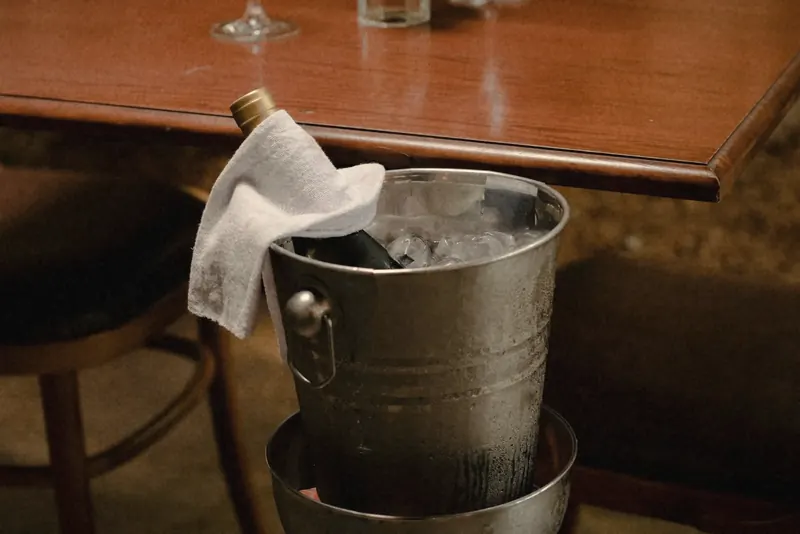
Chilling a bottle fast
A few published measurements, to be read as orders of magnitude.
| Method | Measured time | Source |
|---|---|---|
| Water, ice and salt | from 24 to 3 °C (75 to 37 °F) in 34 minutes | America's Test Kitchen |
| Water and ice | same drop in 105 minutes; 30 minutes for a Champagne | America's Test Kitchen; Comité Champagne |
| Freezer | from 20 to 8 °C (68 to 46 °F) in about 20 minutes | Decanter |
| Fridge | white from 20 to 8 °C (68 to 46 °F) in 45 minutes; red from 20 to 15 °C (68 to 59 °F) in 20 minutes | Decanter |
| Fridge, overnight | 7 to 8 °C (45 to 46 °F) after 12 hours | iDealwine |
Salt lowers the melting point of ice. The bath drops below 0 °C (32 °F) and wraps the whole bottle, America's Test Kitchen explains. The risk with the freezer is forgetting the bottle, so set a timer. For sparkling wine, see how to serve and store Champagne.
Too cold? Just wait
The Wine Society would rather have a wine too cool than too warm, since it warms up quickly in the glass.
To take the bottle out in time, you still need to know where it is: a cellar map kept in an app like Caviste tells you. For long-term keeping, see how to store wine at home.
Frequently asked questions
What temperature is "room temperature" for red wine?
No reliable historical figure exists. Current guidelines run from 10 to 13 °C (50 to 55 °F) for light reds to 15 to 18 °C (59 to 64 °F) for the most full-bodied.
What temperature should Champagne be served at?
Between 8 and 10 °C (46 and 50 °F), according to the Comité Champagne. Sommeliers use 6 to 12 °C (43 to 54 °F) for sparkling wines as a whole, with vintage Champagnes at the top of the range.
Can you serve a red wine chilled?
Yes, if it is light and low in tannin, between 10 and 13 °C (50 and 55 °F). On a tannic red, cold brings out astringency and bitterness, and you are better off staying between 15 and 18 °C (59 and 64 °F).
Caviste, on your phone and on your computer
Scan the label, your cellar fills itself in and tells you when to open each bottle.