How to serve and store Champagne
By Alexandre Rabottin, founder of Caviste. Published November 21, 2026.
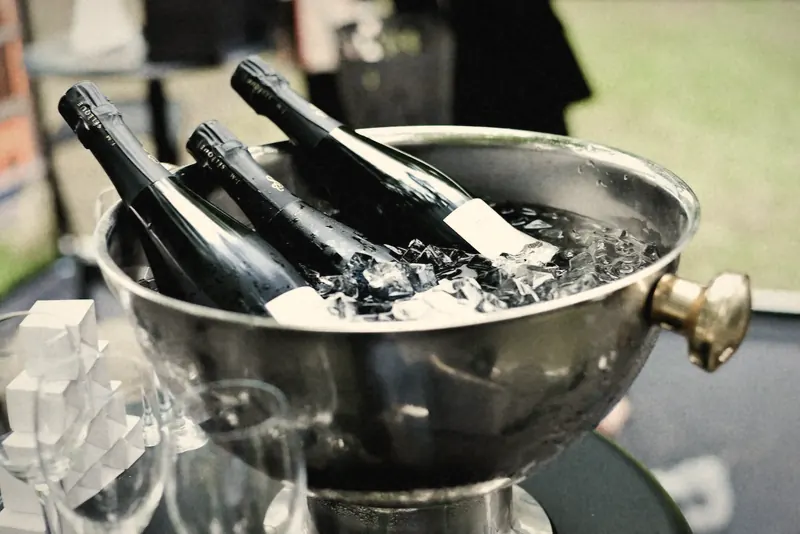
How much sugar sits behind "brut", what temperature to serve it at, which glass to use and how long to keep it. EU law settles some of these questions; the Comité Champagne and researchers in Reims answer the rest.
Always a flute, always store it upright, a spoon in the neck to keep it fizzy: Champagne comes with plenty of rules. EU law, the Comité Champagne (the region's trade body) and researchers at the University of Reims help sort out which ones hold.
A brut has less than 12 g of sugar per liter, an extra dry has more. Serve it at 8 to 10 °C (46 to 50 °F) in a tulip glass, and store the bottle upright or on its side, in the dark, at 10 to 15 °C (50 to 59 °F). Once open, it lasts a day or two under an airtight stopper. A spoon in the neck does nothing.
Your cellar tells you when to open each bottle
Scan the label: Caviste files the bottle, works out its drinking window and tells you when it reaches its peak. Free up to 30 wines.


Brut, extra dry, demi-sec: how much sugar?
The term on the label depends on the sugar added at disgorgement. EU Delegated Regulation 2019/33 sets the thresholds for every sparkling wine made in the Union.
| Term | Sugar per liter |
|---|---|
| Brut nature (pas dosé, dosage zéro) | under 3 g, no added sugar |
| Extra brut | 0 to 6 g |
| Brut | under 12 g |
| Extra dry (extra sec) | 12 to 17 g |
| Sec | 17 to 32 g |
| Demi-sec | 32 to 50 g |
| Doux | over 50 g |
Despite the names, "extra dry" and "sec" are sweeter than "brut". Each term sets a ceiling, with a tolerance of 3 g/l, and the dosage says nothing about quality. Demi-sec and doux are better kept for dessert, according to the French consumer magazine Que Choisir.
Other terms on the label
- Non-vintage brut: a blend of several harvests, aged at least 15 months in the cellar.
- Vintage: a single year, at least 3 years in the cellar (see our Champagne vintages).
- Prestige cuvée: a marketing position that no regulation defines.
- Blanc de blancs: white grapes only, nearly always chardonnay. Blanc de noirs comes from pinot noir or meunier.
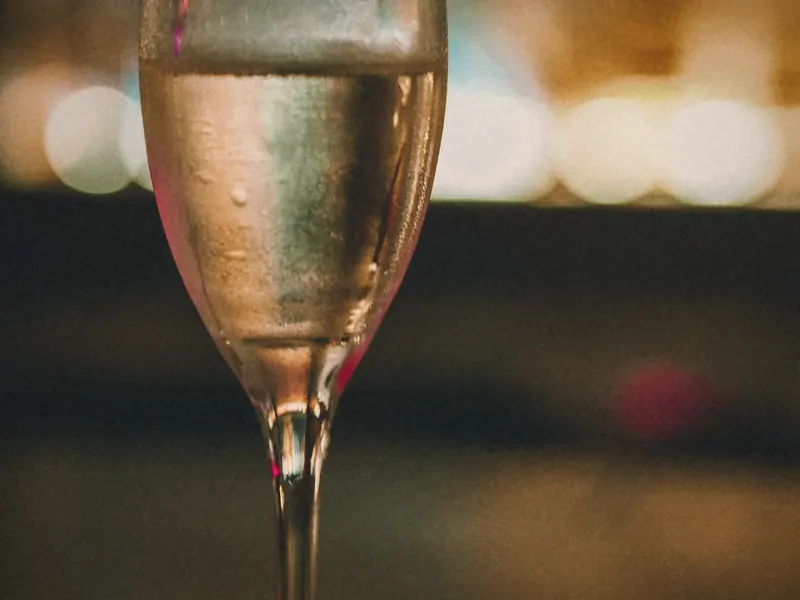
Serve it at 8 to 10 °C
The Comité Champagne recommends 8 to 10 °C (46 to 50 °F), up to 12 °C (54 °F) for a vintage. Allow 30 minutes in a bucket of water and ice, or a few hours at the bottom of the fridge.
Cold holds the gas in, and a warmer Champagne loses more of it as you pour (Liger-Belair and colleagues, 2010). See also wine serving temperature.
A tulip glass rather than a flute
A coupe lets bubbles and aromas escape and a flute hides the aromas, says the Comité Champagne, which recommends a tulip-shaped glass. In 2012 the Reims team measured gas two to three times more concentrated above a flute than above a coupe, and that gas stings the nose.
A tulip-shaped white wine glass does the job (see which glass for which wine). Wash it in hot water, without detergent.
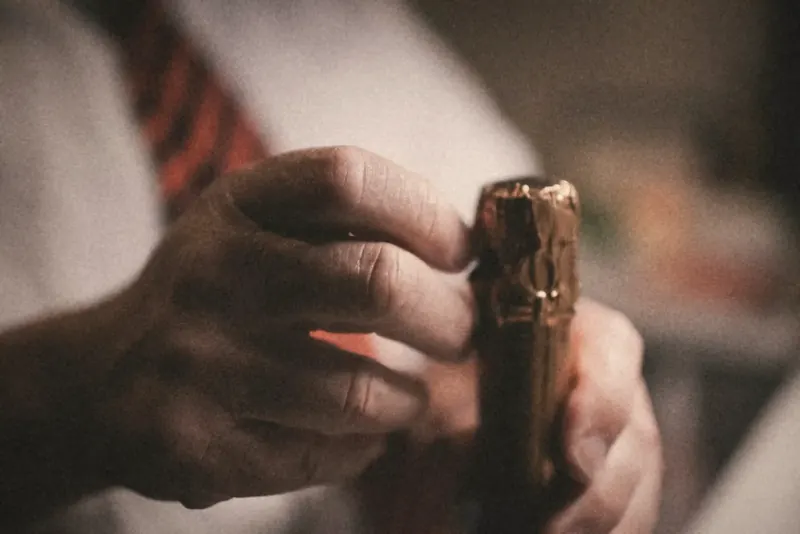
Open it without popping the cork
- Loosen the wire cage, keeping your thumb on the cork.
- Tilt the bottle 30 to 45 degrees, never toward anyone.
- Hold the cork and turn the bottle.
A cork can reach an eye in 0.05 seconds, faster than you can blink. A review in the BMJ (2023) found that 26% of people treated for a serious injury remain legally blind in the injured eye.
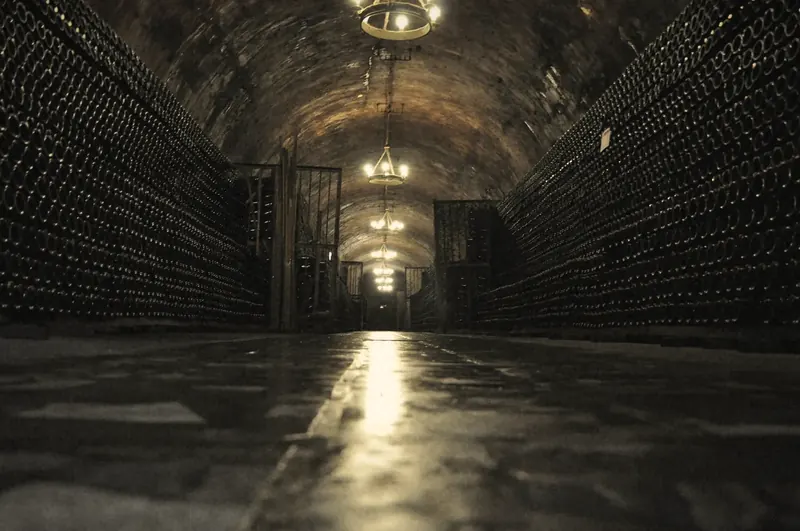
Upright or on its side, but cool and dark
Position makes no difference, says the Comité Champagne, because in the humidity of a cellar the cork does not dry out. Decanter still advises laying down bottles you plan to keep for a long time.
What it needs most is a dark place between 10 and 15 °C (50 and 59 °F), and not the fridge for long-term storage. See how to store wine at home. Large formats hold their gas better: according to the Reims team (2023), a Champagne stops sparkling after about 40 years in a bottle, against 82 years in a magnum.
Drink non-vintage brut within two or three years
| Source | Non-vintage brut | Vintage |
|---|---|---|
| Comité Champagne | several years, depending on the producer | depending on the producer |
| A major Épernay house | up to 24 months after purchase (750 ml) | 7 to 10 years after purchase |
| Decanter (Christelle Guibert) | about 3 years after disgorgement | |
| Caviste's table of drinking windows | 1 to 3 years after purchase | 8 to 20 years after the vintage |
When the disgorgement date is printed on the bottle, start from that. Caviste works out a Champagne's drinking window from the type of cuvée rather than from the appellation, since a single appellation covers the whole region (see our Champagne page).
A spoon in the neck does nothing
Two tests showed it, reported by Scientific American in 2013. Tasting blind, Richard Zare (Stanford) found no difference with or without a spoon. In Épernay, open bottles lost pressure at the same rate either way.
An airtight stopper and straight back into the fridge work better: the bottle then lasts a day or two. See how long open wine lasts.
Frequently asked questions
What is the difference between brut, extra brut and extra dry?
Sugar. Under 12 g/l for a brut, 0 to 6 g/l for an extra brut, and 12 to 17 g/l for an extra dry, which makes it sweeter than brut despite the name.
Should Champagne be kept in the fridge?
Not for storage, only for a few hours before serving. An opened bottle, on the other hand, should go straight back in, stoppered.
How many glasses are in a bottle of Champagne?
The Comité Champagne counts six 125 ml glasses on average per 750 ml bottle.
Caviste, on your phone and on your computer
Scan the label, your cellar fills itself in and tells you when to open each bottle.